You’re standing in front of your microwave with a plate of Thanksgiving leftovers, wondering: can this compostable plate go in the microwave, or will it turn into a soggy disaster?
The short answer: Yes, quality compostable plates made from bamboo and sugarcane are microwave safe for reheating food (typically 1-3 minutes). They won’t melt, warp, or release chemicals like some plastic alternatives.
But not all compostable plates perform the same way. Here’s what actually matters when reheating on eco-friendly dinnerware.
Compostable plates made from bamboo pulp and sugarcane (bagasse) are naturally heat-resistant because of their fibrous structure. Unlike plastic that melts or paper that gets soggy, these materials:
The key is the material. Bamboo and sugarcane fibers bond tightly during manufacturing, creating a plate that’s sturdy enough for hot food and microwave reheating.
Safe microwave times for bamboo/sugarcane plates:
Avoid:
Think of compostable plates like ceramic for reheating purposes; perfectly safe for normal use, just not designed for prolonged high-heat cooking.

Paper plates often have a thin coating that can break down in the microwave, creating a soggy mess. Bamboo and sugarcane plates maintain their structure because the fibers are naturally more heat and moisture resistant.
Absolutely. This is one of the best uses for microwave-safe compostable plates:
Perfect for reheating:
Pro tip: Cover food with a damp paper towel or microwave-safe cover to retain moisture. The plate itself will stay firm while your leftovers heat evenly.
This is why compostable party plates are perfect for Thanksgiving hosting; guests can reheat seconds without you washing dozens of ceramic plates.
Calculate Your Thanksgiving Plate Needs
Not all compostable plates perform the same in microwaves. Here’s what to look for:
Materials that ARE microwave safe:
Materials that AREN’T microwave safe:
How to tell: Check the product description for “microwave safe” or “heat resistant”. Quality manufacturers will specify this.
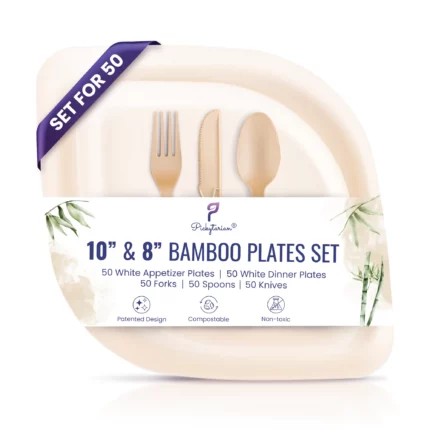
Pickytarian plates are made from bamboo and sugarcane pulp, tested to withstand microwave reheating for up to 3 minutes without structural issues.
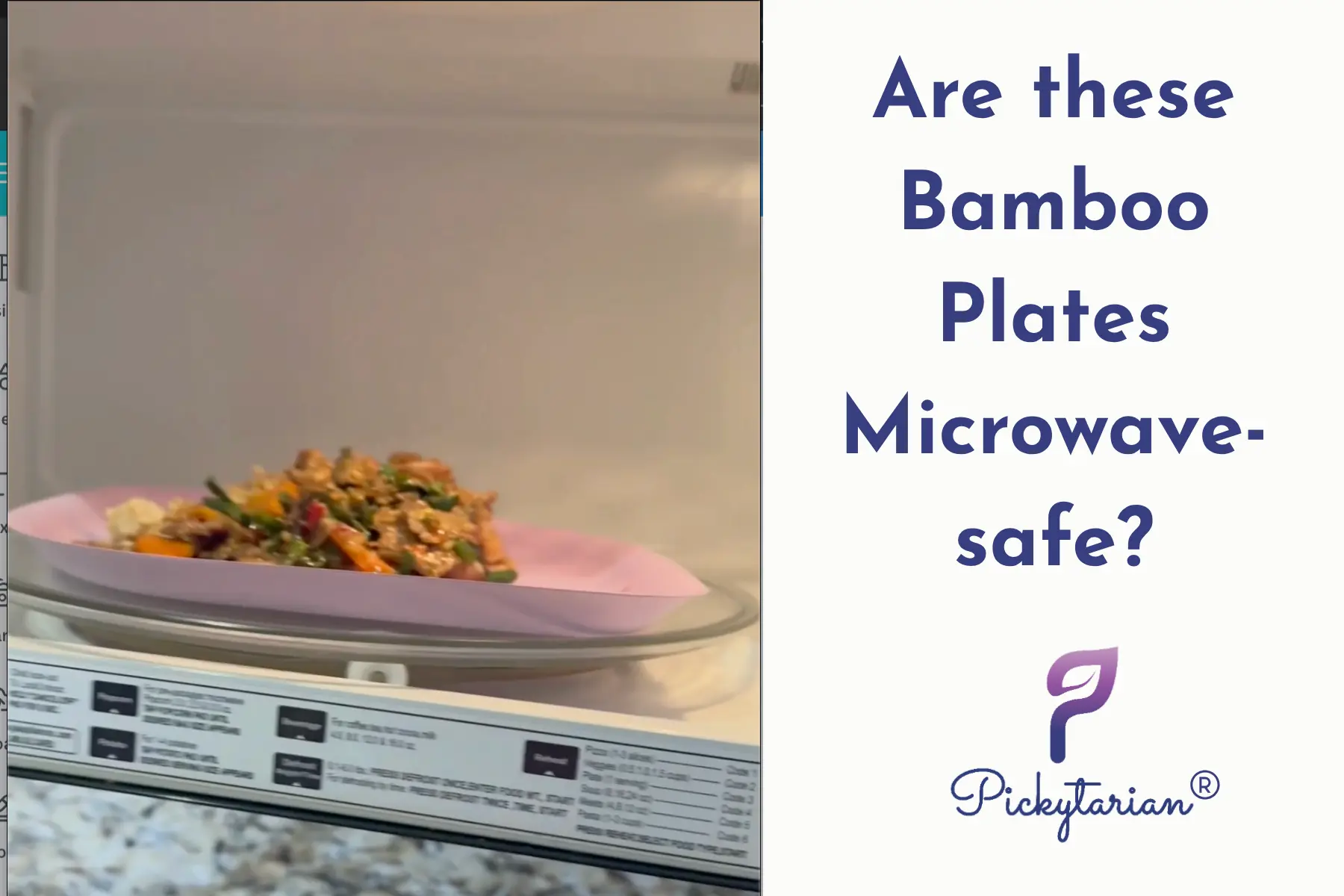
I put our Pickytarian plates to the test by reheating leftover Thai food in the microwave.
The plates held up beautifully – no warping, no soggy spots, and the food heated evenly. Our bamboo and sugarcane plates are naturally heat-resistant, so you can confidently reheat party leftovers or warm up appetizers without transferring to another dish.
Perfect for when guests want to reheat their food at parties or events. No extra cleanup, no hassle – just microwave-safe, compostable convenience.
Watch the test in our video to see how they perform!
Yes. If compostable plates can handle microwave reheating, they can definitely handle hot food from your oven or stovetop:
The plates are designed to be heat-resistant from the start. Many caterers use compostable plates for hot buffet service without any problems.
Yes, you can freeze food on compostable plates, though it’s not their primary design purpose:
Works fine for:
Not ideal for:
The plates won’t degrade in the freezer, but moisture can create frost buildup. If you’re freezing meals, it’s better to use reusable containers and transfer to compostable plates when reheating.
One major advantage of bamboo and sugarcane compostable plates over plastic: no harmful chemicals.
What compostable plates DON’T contain:
What they ARE made from:
When you microwave plastic plates, heat can cause chemical leaching into your food. Compostable plates are inert—they’re just plant fibers, so there’s nothing to leach.
This is especially important for children, pregnant women, and anyone avoiding endocrine disruptors.
Mistake 1: Microwaving an empty plate
Mistake 2: Heating for 5+ minutes
Mistake 3: Using plates with metallic designs
Mistake 4: Expecting them to work like ceramic for cooking
Mistake 5: Not covering food
Yes, if:
No, if:
For 99% of normal microwave use; reheating leftovers, warming up food, melting butter, quality compostable plates work perfectly.
We make our compostable plates from bamboo and sugarcane specifically because these materials handle heat, moisture, and real-world use:
Plus, you’re supporting a black-owned, woman-owned business that donates 5% of sales to fight hunger and homelessness.
Yes, compostable plates made from bamboo and sugarcane are microwave safe for 1-3 minutes of reheating. They won’t melt, warp, or release chemicals.
The plate itself will become warm to the touch but won’t get dangerously hot.
Yes, bamboo plates are among the most microwave-safe compostable options. Bamboo fiber is naturally heat-resistant.
Yes, sugarcane (bagasse) plates can be microwaved for reheating food. They handle heat and moisture well.
No, quality bamboo and sugarcane plates will not melt. Unlike plastic, they’re made from plant fibers that withstand heat without melting.
Absolutely. Compostable plates are perfect for reheating pizza; they won’t get soggy from grease and can handle the heat.
1-3 minutes is ideal for reheating. Beyond 3 minutes is unnecessary and can dry out the plate, though it won’t cause safety issues.
No, bamboo and sugarcane compostable plates contain no BPA, phthalates, or PFAS. They’re made from plant fibers with no chemical additives that leach when heated.
Skip the dish mountain. Get microwave-safe, compostable plates that your guests can use for dinner, dessert, and leftovers—then toss guilt-free.
Shop Thanksgiving Plate Collections
Need help planning quantities?
Use Our Free Party Calculator
Related Articles: